Ladakh: The land from where you wouldn’t want to come back.
 The “Jigbu” is a mythical figure in the Ladakhi culture, similar in many ways to the Nepalese “Yeti”. He is said to be a giant man, who holds his breath for most of the day and night, but blows it out occasionally and explosively, causing violent and unexpected storms which appear out of nowhere.
Mountains mesmerise every eye which sees it. Himalayas being the king of them all is beyond the wildest dreams of most people, in its sheer size and vastness you get a chance to experience its exquisite and excruciating grandeur. In this vast barren rugged mountains is nestled the hidden paradise for trekkers, tourists and travellers. Beyond the Himalayas on the edge of Tibet, with crystal clear skies not affected by the seasons as we know it, in the mainland of India, lies the wonderland – Ladakh.

One can never understand the mystics of such terrain. When the climate would change, when an avalanche would descent upon you, when a landslide could block your way for days together is not in the power of MAN to predict. We try to understand these phenomena as an act of authority beyond our senses. “Jigbu” or the “Yeti” or any other name you wish to call it.

“The Mountain Tamers” an apt name given to HIMANK along with Border Roads Organisation, have made is possible for us to meander through this rugged terrain. Once we travel on this route we understand that they were able to do it because they work without defying the forces of nature. Some of the interesting road signs are evidence to this fact.
“We cannot command nature, except by obeying her”
“The journey of life is long, the path unknown”
“Check your nerves on my curves”
“I am curvaceous, be slow”
Ladakh is a land of magical mystery, where magnificent peaks reach up to the heavens, and the depth of religious fervour in its mystical monasteries is unfathomable. Ladakh is a harsh land; In winter all is white, on a grey day the earth melts into the sky above, but on a sunny day the dazzling quality of pristine snow standing dramatically against the deep blue sky is unforgettable. Mountains are majestic in their power and spirituality. [Bob Gibbons: Land of Magical Monasteries] The Indus valley around Leh in Ladakh has perhaps one of the greatest concentrations of monasteries anywhere in the world. Although all religions coexist in harmony, Buddhism here renders an overwhelming colour to this fairyland. Although Buddhism is thought of as a religion, it is more a way of living, a code of practice, a search for peace and an end to suffering. The monasteries you see here stands evidence to this.

 The “Monks” as we know them, dressed in bright red robes, with their calm and peaceful demeanour sets the mood of the land. Their welcoming faces make us feel at home. Their quiet walk makes us wonder, why we are in a hurry in this world. Their prayers instil the fact that we need to look inside us to find our world and who we are. We believe “The journey of life is long, the path unknown”, but seeing them you realise that, they are aware of the path.


 This influence is seen all over the land, mainly attributed to the terrain. Our journey from Srinagar to Leh took us two full days. Covering just 200 kms in a day is not exactly our idea of travel – we who are city dwellers and used to express highways. [NH 1D which criss-crosses this rugged terrain is one of its kind in the world, which includes the highest motorable roads through Khardungla and Changla Passes.] Life is slow as per our standards. This makes the stay and travel here worth its while. The slow movement helps you take in and assimilate all the beauty of this HIGH ALTITUDE DESERT.
Due to harsh climatic conditions here the mountains and plains are covered under snow for over 8 months in a year. This force the inhabitation to go into a kind of hibernation. This has set the style of living and culture here with people understanding hardships in a way we would never know and building a sense of brotherhood. Buddhism with their concept of self sustaining monasteries has taught people to overcome the extreme climate and coexist with nature.

 Ladakh- The land of colour and prayer flags. Life is seen clearly as good and bad here. This is depicted in colours in a number of ways. Typical examples are the monastery festivals which happen during the summer time from May to September. Life is depicted in bright colours with dance and celebration. Colours and demeanour of the performers renders a strong depiction of character which imprints in the mind for a lifetime. Masked dances are at the epicentre of the festival and depicts the conflicts of the mind and how the good overcomes evil.


Some of the coldest inhabited places on the planet are also found in the Himalayas. DRASS being the second coldest inhabited place in the world after Siberia. We were told that the temperatures during winter could go down up to -60 degrees. Kudos to the Indian Army who fought the Kargil War [Although in Drass – Tololing Mountain] in such inhospitable terrain. Believe me, the steep slopes of Tiger hill which was scaled to fight this war by Rajputana Rifles instils the might of the Indian Defence forces in the face of adversity. Visit to the Drass memorial makes you feel proud of your country and at the same time raises questions about the human mind and the boundaries it can draw. It is an irony, that this peaceful land has been a battlefield.

Travel is always on my mind. I have realised that there are two kind of places you can visit. One, where the journey is more important than the destination itself, second, where the journey is immaterial compared to the destination. Ladakh falls in the first category. Hence we decided to travel by road all the way from Delhi, to see the Landscape and Life change as we went higher and higher on the terrain. Every day is a travel here, the difference being that you do not look forward to a destination; you wish it to be a never ending journey.


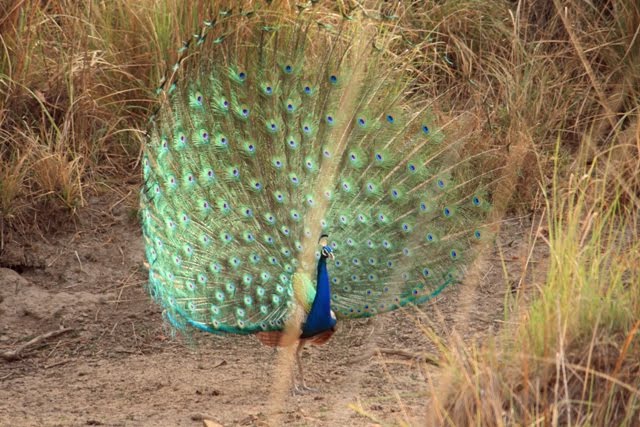
 Silhoutte of a Peacock